Key takeaways
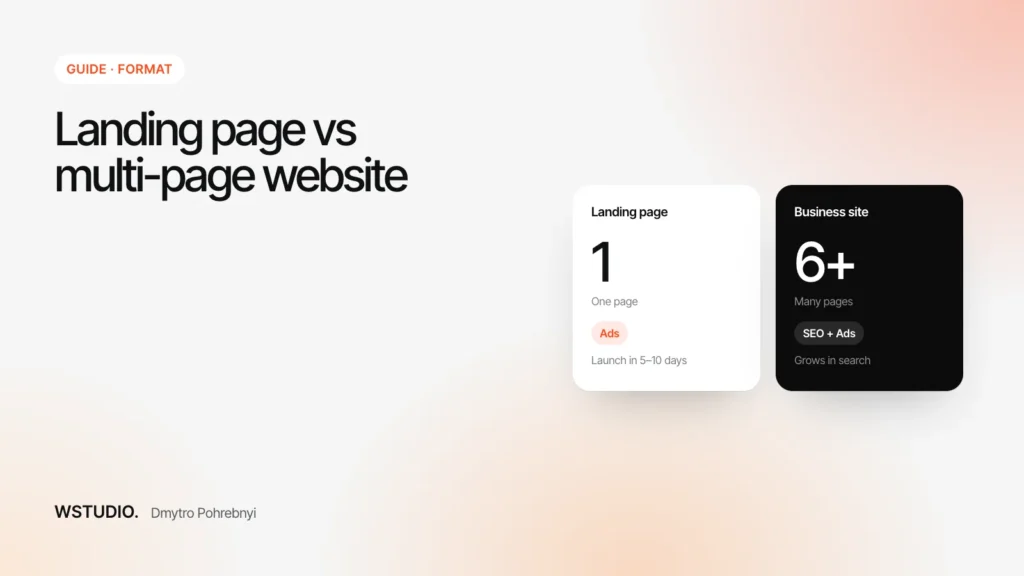
- A turnkey landing page starts at $400 and takes 5–10 days.
- A business website starts at $600, an online store at $1000.
- The price depends on unique layouts, features and integrations — not page count.
- Budget separately for the domain, hosting, copy and your first ads.
A small business website in 2026 costs from $400 for a landing page to $1000 and more for an online store or a complex Next.js project. Quotes can differ several times over, and almost always the reason is what is included: custom design or a template, copy, an admin panel, SEO, payments and analytics.
I’m Dmytro Pohrebnyi, I build turnkey websites on WordPress and Next.js. Below are my real prices, what they consist of and how to plan a budget without surprises after launch.
How much does a website cost in 2026?
The short answer is in the table. These are fixed plans I start from; for non-standard projects the exact price comes after a short brief.
| What you order | Price | Timeline |
|---|---|---|
| Landing page — one selling page | $400 | 5–10 days |
| Website up to 3 pages + leads to Telegram | $600 | 1.5–2 weeks |
| Website up to 6 pages + basic SEO | $850 | 2–3 weeks |
| Business website | from $600 | 1.5–3 weeks |
| Online store | from $1000 | 2–4 weeks |
| Next.js website or web app | from $1000 | 2–4 weeks |
Paying 50% upfront makes the total 10% lower; paying in full makes it 15% lower. All plans with what’s included are on the pricing page.
What drives the price of a website?
Page count is a poor unit of price. Ten service pages on one layout can cost less than a single landing page with a complex calculator. Six things matter:
- Unique layouts. Home, service, case study and contacts are four different designs. Twenty service pages on one template are one design.
- Design. A custom layout for your brand takes longer than adapting a ready structure — but your site doesn’t look like thousands of others.
- Features. Cart, online payment, catalog filters, accounts, calculators, booking — each adds days of work and testing.
- Integrations. CRM, delivery services, payment providers, Google Analytics, a Telegram bot for leads.
- Languages. A second language means separate URLs, meta tags and hreflang markup, not just translation.
- Content. Ready copy and photos speed up launch. Writing or shooting them is a separate budget.
Website builder, freelancer or turnkey developer?
| Option | Cost | When it fits | The catch |
|---|---|---|---|
| Builder (Tilda, Wix) | Monthly subscription + your time | Testing an idea over a weekend | You rent the site; limits on SEO and speed |
| Junior freelancer | Below market | A simple page with no sales goals | Missed deadlines, nobody to hand the site over to |
| Turnkey developer | From $400 for a landing page | The site must bring clients and grow with you | Needs 5–10 days and a brief |
| Large agency | Several times more | Complex products, big teams | Managers in between, longer timelines |
Dmytro’s take. The most expensive website is the one you have to rebuild. I often take over projects after builders and cheap contractors: the client has already paid once, lost months and now pays again. Launch a small but solid site first and grow it.
How long does website development take?
A landing page takes 5–10 working days, a business website 1.5–3 weeks, an online store 2–4 weeks. Most of the time goes into agreeing on structure and copy, not code:
- Discovery call — 30–60 minutes.
- Structure and content — 1–2 days.
- Design — 2–5 days, desktop and mobile.
- Code and admin — 4–10 days.
- Launch — 1–2 days: domain, SSL, analytics, speed check, guide.
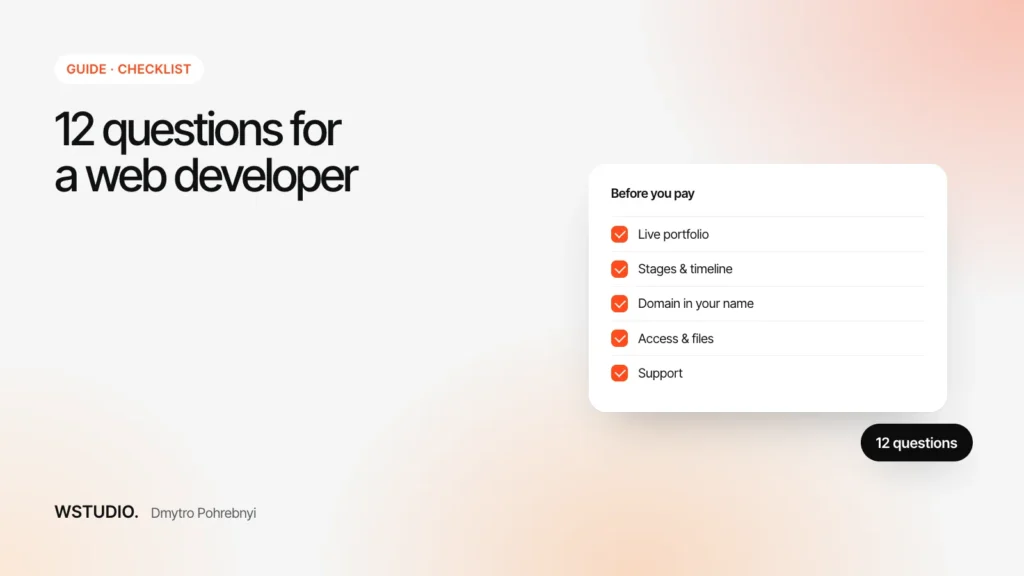
More on the process — in how to choose a web developer.
Which costs do people forget?
- Domain — a small yearly fee.
- Hosting — cheap hosting often makes the site slow.
- Copy and photos — plan time or budget if you don’t have them.
- Ads — a site without traffic doesn’t sell; plan the first month of Google Ads or Meta.
- Support — plugin updates, backups, small edits.
How to spend less without hurting the result
- Start with a landing page for one service, test demand, then expand.
- Prepare copy, logo and photos before the start.
- Don’t order features “for the future”.
- Pay online upfront — that’s 10–15% off.
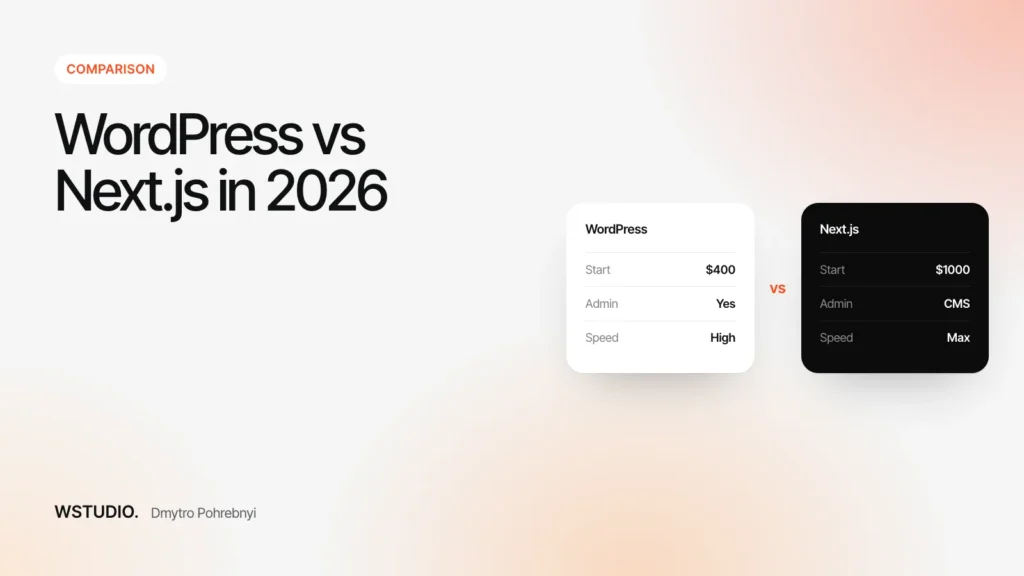
- Pick the right platform: see WordPress vs Next.js.
What can you get for your budget?
- Under $500 — a turnkey landing page with an admin panel, lead form and mobile version.
- $600–850 — a website up to 6 pages with basic SEO.
- From $1000 — an online store, a Next.js site, CRM and custom features.
Not sure what you need? Message me — 15 minutes is enough to find the format that works for your budget. Examples are in the portfolio.